
Most contractor website design gets judged at the wrong moment: the day it launches, when everybody says it looks great. The right moment is six months later, when you ask how many signed jobs it brought in. If nobody can answer, you paid for a brochure.
A homeowner with a leaking roof or a dead AC unit doesn't care about your parallax scroll. They pull out a phone, search, open two or three sites, and call the one that looks local, legit and easy to reach. Your website either wins that quick test or sends the job to the next contractor on the list.
Why most contractor websites never make the phone ring
We audit a lot of contractor sites. The same problems show up over and over, and none of them are about colors or fonts:
- One page for everything. "We do roofing, siding, gutters and windows" on a single page. Google can't rank that page for "roof replacement in [your city]", and the homeowner can't tell if you do their job.
- No city signal. The site never says where you work, beyond a footer address. Homeowners want a local crew, and local search needs to know your service area.
- Slow on a phone. Big uncompressed photos, a video in the header, five plugins loading chat widgets nobody uses.
- The phone number is hidden. It sits on the Contact page, as plain text you can't tap.
- A form with 14 fields. Nobody standing in a flooded basement fills out 14 fields.
- Stock photos. The same smiling guy in a clean hard hat that shows up on countless other contractor sites. Homeowners notice.
- Zero tracking. Calls and forms come in, and nobody knows if they came from Google Ads, the Google Business Profile, Facebook or a truck wrap.
Each one of these costs you calls. Together, they turn a website into a monthly hosting bill.
What a contractor website actually has to do
Strip it down and a contractor website has three jobs, in this order:
- Get found by homeowners searching for your trade in your area, on Google and in the map results.
- Get trusted in a few seconds: real work, real reviews, license and insurance, a local presence.
- Get the call or the quote request with the least possible friction, and record where it came from.
Everything we put on a page has to help one of those three jobs. If a section doesn't, it goes. That's the whole difference between construction website design built to sell and a pretty site built to be admired.
What we build into every contractor website
Service pages per trade, and per city
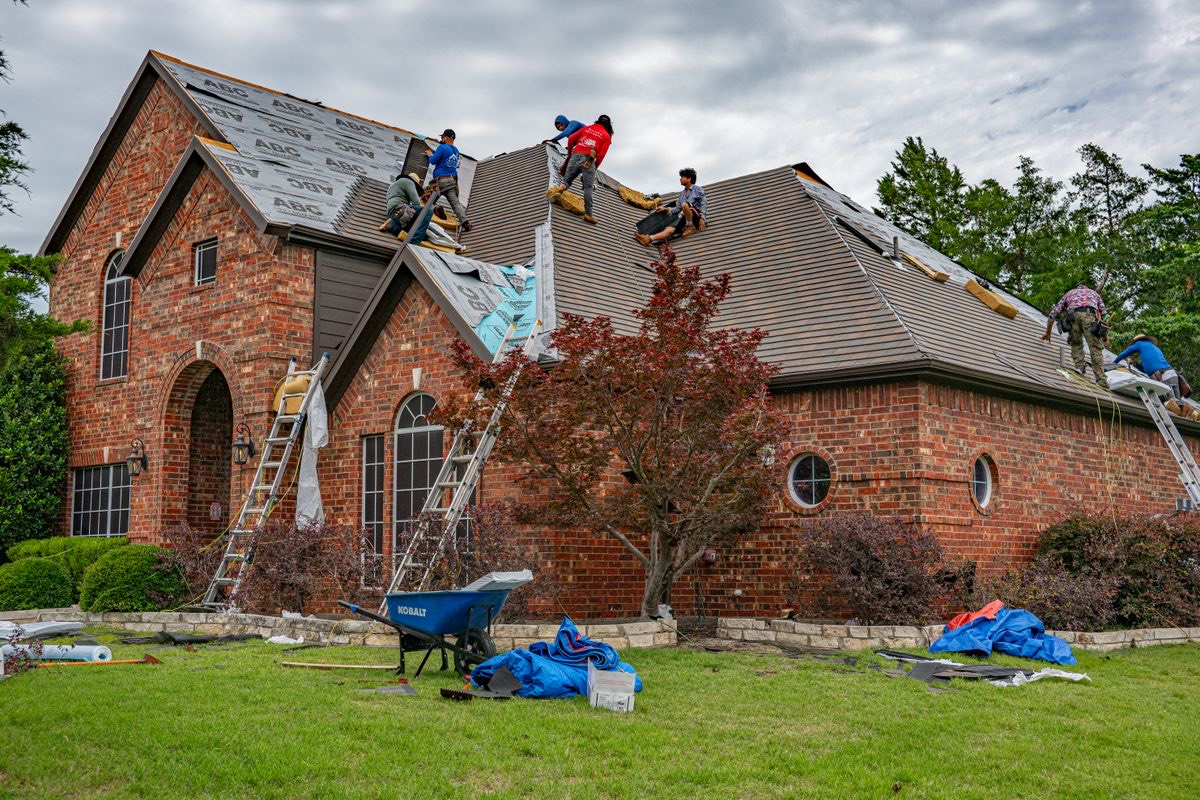
Every main service gets its own page: roof replacement, roof repair, storm damage, gutters. Each one answers the questions homeowners actually ask about that job. Then we build pages for the cities and towns you really want work in, with local projects and details, not a copy-paste of the same text with a new city name swapped in.
This is the backbone of SEO for contractors. A homeowner searching "deck builder in [town]" should land on a page about decks in that town, not on your home page.
Fast on a phone, because that's where the job starts
We build lean pages, compress every image and keep third-party scripts to what earns its place. Google says it recommends site owners achieve good Core Web Vitals, its measures of loading, responsiveness and visual stability. You can test your own site for free in PageSpeed Insights. If your mobile score is ugly, so is the experience of the homeowner trying to reach you.
Click-to-call and a short quote form on every page
Your phone number sits at the top of every page and is tappable. The quote form asks only what you need to call back and qualify the job: name, phone, city or zip, type of project. On bigger tickets we often split it into two or three quick steps, so it feels like a question, not a tax form.
Reviews and real project photos
We pull in your real reviews and build project galleries from your own jobs, organized by service and by city. Before and after photos of a kitchen in a town the homeowner recognizes do more selling than any paragraph we could write. Google itself notes that more reviews and positive ratings can help your local ranking, so reviews pull double duty.
Tracking every call and form to the signed job
This is the part most web designers skip, and the part that matters most. Every call and every form gets tagged with its source: which ad, which keyword, which page. That data flows into your CRM for contractors, and from there into a live dashboard that shows leads, booked estimates, proposals and signed contracts.
So when the $40K kitchen closes, you know it came from the kitchen remodeling page in a specific town, found through a specific search. You stop guessing which marketing works.
Roofing, HVAC and landscaping website design: same bones, different buyer
The structure is the same for every trade. What changes is how the homeowner buys, and the site has to match that.
| Trade | How the homeowner buys | What the site needs up front |
|---|---|---|
| Roofing | Often urgent after a storm or leak; bigger replacements get compared | Tappable phone, storm and repair pages, insurance and warranty info, local roof photos |
| HVAC | Emergency repairs on hot or cold days; planned replacements with financing | Repair vs replacement pages, service area, financing info, brands you install |
| Landscaping and hardscaping | Planned, visual, seasonal; homeowners browse before calling | Big project galleries, design and install pages, a quote form that asks for project type and budget range |
| Remodeling | Long decision, high ticket, spouse involved | Project pages by room, process explained step by step, reviews that mention the whole experience |
A roofing website design that treats a storm-damage lead like a kitchen remodel lead loses both. Good HVAC website design puts the repair call first. Landscaping website design lets the photos do most of the talking. If you want to see how real companies handle this, we broke down the best contractor websites we found and what each one does well.
Contractor website builder or a site built to sell?
A contractor website builder, the drag-and-drop kind, can be a fine start. If you're a one-truck operation and need something online this week, go for it. It beats a Facebook page and nothing else.
The trade-offs show up when you want to grow:
- Templates push you toward a few generic pages, when you need a page for each service and each city you want to win.
- Most templates load a lot of code you never use, which slows the site on a phone.
- Call and form tracking usually gets bolted on later, if at all, so you can't tie a lead to a signed job.
- The site looks like thousands of other sites built on the same template.
Our honest take: if your website is supposed to carry paid ads and local SEO, it needs to be built around your trades, your cities and your tracking from day one. Retrofitting that into a template usually costs more than doing it right.
How your website fits with ads, SEO and your CRM
A website on its own is a store with no road to it. Traffic comes from Google search and maps, Google Ads for contractors, Local Services Ads and social. The website's job is to turn that traffic into calls and quote requests. The CRM's job is to follow each lead to a signed contract.
When the whole funnel is mapped (ad, lead, estimate, proposal, signed job), you can finally see the money. A deck builder we work with put about $8,000 into ads and closed over $200,000 in signed contracts. An electrical contractor spent about $2,500 and closed about $80,000. Those numbers only exist because every lead was tracked from the first click to the signature.
Across our residential construction campaigns, our averages are a cost per lead of $166, a cost per booked estimate of $315 and a cost per signed contract of $1,714, with about 7x return per ad dollar. Results vary by trade, region, price and sales process. But none of it is measurable if the website can't tell you where the call came from.
How a website project with us runs
- Audit. We look at your current site, your Google Business Profile, your competitors in your cities and where your leads come from today.
- Map. We decide which services and which cities get their own pages, based on the jobs you actually want more of.
- Collect. You send real project photos, reviews, licenses, warranties. We write the copy in plain homeowner language.
- Build and track. We build the site, set up call and form tracking, and connect everything to your CRM and live dashboard.
- Grow. We keep adding project pages, city pages and blog posts that bring in more searches over time.
You don't need to know anything about websites. You need to know which jobs you want more of, and where. We handle the rest.
What the website won't do on its own
We'd rather say it now: a great website doesn't fix a slow callback, a vague estimate or a price that's off for your market. It also won't rank overnight. Local SEO builds over months, and paid ads fill the gap while it does.
What a well-built site does is make every dollar of marketing work harder. More of your visitors call, more of your calls are the right jobs, and you finally know which marketing paid for itself.
If your current site looks fine but you can't say how many signed jobs it produced last quarter, start there. Request a free audit and we'll show you what your website is costing you, page by page.
Frequently asked questions
What should a contractor website include?
At minimum: a page for each main service, pages for the cities you want work in, your phone number tappable at the top of every page, a short quote form, real project photos and real reviews. Behind the scenes, it needs call and form tracking so you know which marketing brought each lead.
How much does contractor website design cost?
It depends on how many services and cities need their own pages, and whether you need tracking and CRM connected. We quote after a free audit, once we know which jobs you want more of and where. The better question is how many signed jobs the site needs to bring in to pay for itself.
Can I just use a website builder like Wix or Squarespace?
For a brand new one-truck business, a builder is a reasonable start. Once you run paid ads or want to rank in several cities, you need service and city pages, fast mobile load and tracking built in from day one, which templates make harder.
Will a new website get me to the top of Google?
Nobody can honestly guarantee rankings. A well-structured site with service and city pages, good speed and real reviews gives you the foundation local SEO needs, and it usually builds over months. Paid ads can bring calls while organic rankings grow.
Do I need a separate website for each trade?
Usually not. One strong site with a dedicated page for each trade and service tends to work better than several thin sites. The exception is when two trades sell to completely different buyers, like commercial and residential, and even then separate sections often do the job.
How do you track which leads turn into signed jobs?
Every call and form is tagged with its source, like the ad, keyword or page. That goes into your CRM, where each lead moves through estimate, proposal and signed contract. You see all of it on a live dashboard, so revenue ties back to the marketing that produced it.