
Most lists of construction marketing ideas give you 25 things to try and no clue which one pays the bills. Start a podcast. Sponsor a Little League team. Post every day. Sure. And the crew still needs work next month.
If you spent $3,000 on marketing last month and can't say how many signed jobs came from it, the problem isn't a lack of ideas. It's that nobody ranked them. So that's what this list does: every idea below is ordered by how directly and how fast it tends to turn into signed contracts, based on the campaigns we run for construction and home services companies every day.
This is a list of ideas, not a full plan. If you want to build the plan around them (budget, calendar, who does what), read our guide on the marketing plan for a construction company.
How we ranked these ideas
Three questions, in this order:
- Does it reach a homeowner who already has a project? Intent beats awareness when you need work on the schedule.
- How fast does it pay? Some ideas bring signed jobs in weeks. Others take months and then keep paying for years.
- Can you measure it down to the signed job? If you can't tell whether it made money, you can't tell whether to keep paying for it.
For context, here are our averages across residential construction campaigns: cost per lead around $166, cost per booked estimate around $315, and cost per signed contract around $1,714. Results vary by trade, region, price and sales process. Keep those numbers in mind as you read. They are the yardstick for every idea on this list.
Tier 1: ideas that put signed jobs on the board fastest
1. Track every lead to the signed job before you spend another dollar
It's not glamorous, but it's number one for a reason. Every other idea on this list gets better, or gets cut, once you know which ad, keyword or post brought which job. Put every lead in one CRM with its source attached, and mark each stage: estimate booked, proposal sent, signed, lost. Without this, you're ranking your own marketing by gut feeling.
That's the difference between knowing which ad brought the $40K kitchen and guessing. We explain how we set this up in CRM for contractors.
2. Run Google search ads on the jobs you want most
Someone searching "bathroom remodel near me" has a project and a budget in mind. Search ads put you in front of that person today, not six months from now. The trick is focus: bid on the services with the best margins, in the areas your crew actually wants to drive to, and block the searches that waste money (DIY, jobs, cheap, free). Our page on Google Ads for contractors covers the setup that keeps the budget clean.
One deck builder we work with put about $8,000 into ads and closed more than $200,000 in signed contracts. That's the kind of return search intent can produce when the whole funnel is tracked.
3. Turn on Local Services Ads if your trade qualifies
Local Services Ads sit at the very top of Google with a verification badge, and you pay per lead instead of per click. The verification takes some paperwork, but homeowners trust that badge. For trades like roofing, HVAC, plumbing and electrical, LSA often becomes one of the cheapest sources of booked estimates. Run it next to search ads, not instead of them.
4. Fix your Google Business Profile
When a homeowner searches your trade plus their town, the map pack shows up before most websites. Fill in every service, every area you cover, your hours, and add real photos from real jobs, often. Google lists what affects local ranking in its own tips to improve your local ranking: relevance, distance and prominence. You can't control distance. You can control the other two.
Tier 2: ideas that make every ad dollar work harder
5. Ask for reviews at the moment of the handshake
The best time to ask for a review is the day the homeowner walks through the finished job and says "wow." Not three weeks later by email. Send a direct link by text right there. Google even gives you a short link to share, explained in its guide to getting more reviews. More recent reviews help your map ranking and raise the conversion rate of every ad you run.
6. Build one landing page per service, not one page for everything
A homeowner who clicked an ad for "paver patio" should land on a page about paver patios, with your photos of paver patios and a form to book an estimate. Not on your homepage, where they have to hunt for it. This single change often lowers cost per lead without touching the ad budget, because more of the people you already paid for actually fill out the form.
7. Retarget website visitors with video of your crew
Most people who visit your site don't call on the first visit. They're getting other bids. Retargeting on Facebook and Instagram shows them your work again while they decide: a 20 second before and after, the crew setting forms, the homeowner walking the finished deck. It's cheap because the audience is small and already interested.
8. Film every job for ads and social
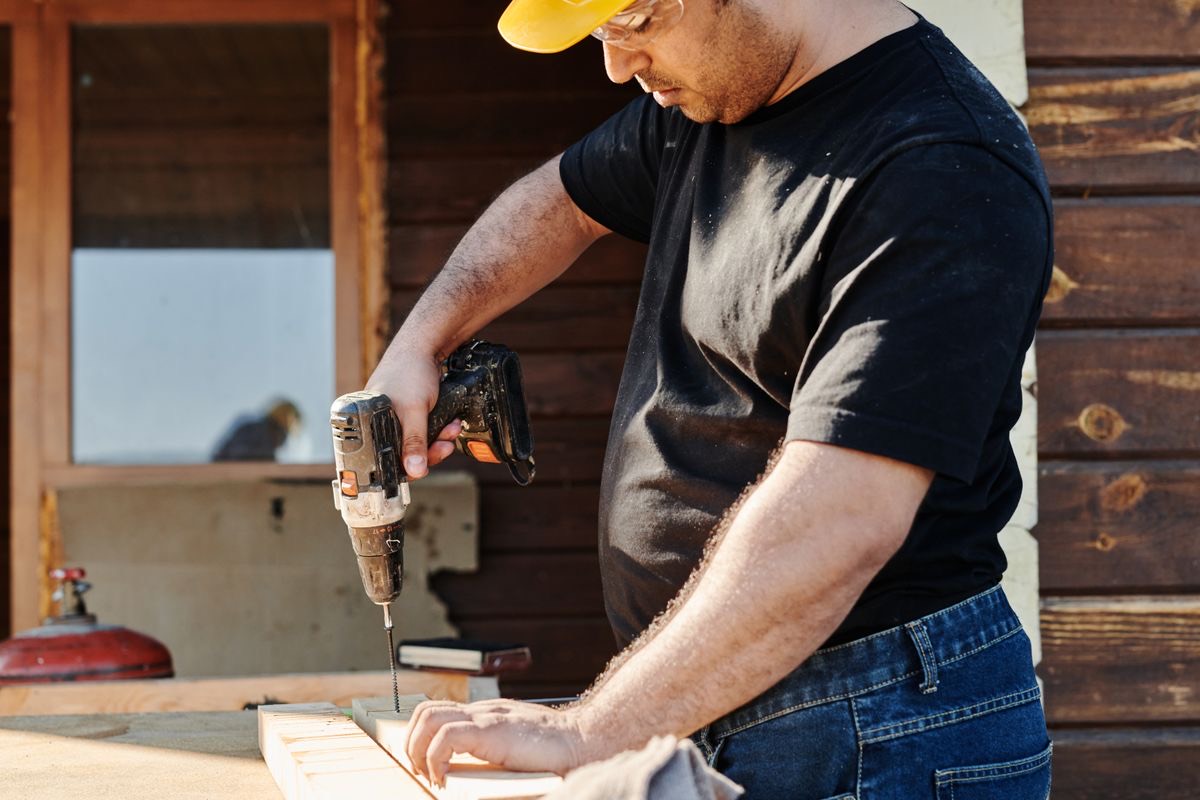
Your jobsite is a content studio you already pay for. A phone, a few clips at the start, middle and end of each project, and you have material for ads, Instagram and your website for months. Real work beats stock photos every time, especially for home improvement marketing where the homeowner wants to see what you actually build. We go deeper on this in video marketing for contractors.
Tier 3: ideas that compound over months
9. Write service and city pages that rank
SEO is slower than ads, full stop. But a page that ranks for "roof replacement in [your town]" keeps bringing calls after you stop paying for clicks. Start with one page per core service and one per main city you serve, with real project photos and real answers to the questions homeowners ask on estimates. Every month you keep at it, your cost per lead from organic search drops.
10. Email and text your past customers before the slow season
Every homeowner you ever worked for is a possible repeat job or referral, and you already paid to win them once. A short campaign before the slow season (a maintenance check, a seasonal offer, a new service you added) often brings work at almost no ad cost. One home services company we work with spent about $1,500 a month on ads and closed about $99,000 in two jobs. Imagine how much easier those numbers get when past customers also come back. Keep commercial email legal by following the FTC CAN-SPAM compliance guide.
11. Put yard signs on every active job
The neighbors are already watching your crew. A clean yard sign with your name, trade and a short web address turns that attention into calls from the same street, where the houses are similar and the homeowners compare notes. It's old school, cheap, and still works.
12. Make referrals a system, not luck
Referrals are great until the month they stop. Instead of waiting, ask at the end of every job: "Who else on this street has been talking about a project?" Keep track of who sends you work and thank them properly. Referrals shouldn't be your whole construction marketing strategy, but they should never be left to chance either.
Ideas that feel productive but rarely pay
Every item below has a place. None of them should come before the list above.
- Boosting random posts. The "Boost" button optimizes for likes, not estimates. Run real campaigns with a goal tied to leads.
- Buying shared leads forever. Paying Angi or Thumbtack for a lead that five other contractors also got turns every estimate into a price war. Fine to fill gaps, dangerous as your main source.
- Brand awareness with no tracking. Billboards, sponsorships and radio can work for bigger companies. If you can't connect them to signed jobs, they're a bet, not marketing.
- A beautiful website that doesn't ask for anything. If there's no clear way to book an estimate on every page, the site is a brochure.
Quick ranking: where to put your next dollar
| Idea | How fast it pays | Main job |
|---|---|---|
| Lead tracking to signed job | Makes everything else pay | Tells you what to cut and what to scale |
| Google search ads | Fast | Catch homeowners already looking |
| Local Services Ads | Fast | Top spot, pay per lead |
| Google Business Profile and reviews | Fast to medium | Win the map pack |
| Landing pages per service | Medium | Lower cost per lead |
| Retargeting and job videos | Medium | Win the homeowner comparing bids |
| SEO pages | Slow, then steady | Calls without paying per click |
| Email and SMS to past customers | Fast when timed right | Repeat work and slow season |
| Yard signs and referrals | Steady | Neighbors and word of mouth |
Across our residential construction campaigns, the average return is about 7x per ad dollar, and when the whole funnel is mapped (ad, lead, estimate, proposal, signed job) we usually see these services return between 6x and 20x. That doesn't come from one idea. It comes from stacking the right ones in the right order and cutting what doesn't sign.
If you'd rather have all of this run as one system, with a live dashboard that shows which idea is actually signing jobs, see how we work as a contractor marketing agency. Or pick the top idea on this list you're not doing yet, and start there this week.
Frequently asked questions
What is the best marketing for a construction company?
The best marketing is the one you can trace to signed contracts. For most construction and home services companies, that starts with Google search ads, Local Services Ads and a strong Google Business Profile, because they reach homeowners who already have a project. SEO and email to past customers add cheaper work over time.
How do contractors get more jobs without paying for shared leads?
Build your own lead sources: search ads, Local Services Ads, a website with a page per service, and reviews on your Google Business Profile. Leads from your own campaigns come to you only, so you're not in a price war with four other contractors on every estimate.
How much should a small construction company spend on marketing?
Start from the math, not a percentage. If your cost per signed contract is around $1,700 (our average across residential construction campaigns) and your average job leaves a good margin above that, you can afford to spend. We've seen a home services company close about $99,000 in two jobs spending about $1,500 a month on ads.
What are good home improvement marketing ideas for the slow season?
Email and text your past customers with a seasonal offer or maintenance check, push services that fit the season, and keep your search ads running on high-intent keywords while competitors pull back. Slow season is also the best time to film content and build SEO pages for next year.
Does social media actually bring construction jobs?
Posting alone rarely signs jobs. Paid social does, especially for visual trades like decks, pavers and remodels, and retargeting people who already visited your site. Organic social matters mostly as proof: homeowners check your Instagram before they let you into their house.