
Hiring an HVAC marketing agency is easy. Knowing what it did for you is the hard part. If you spent $4,000 on ads in July and the only thing you can say is "the phone rang a lot," you don't know if you made money or just stayed busy.
Busy is not the goal. A diagnostic call that eats a tech's afternoon and a system replacement that pays for the whole month both count as "a lead" in most agency reports. They are not the same thing, and your marketing should not treat them like they are.
Why most HVAC marketing looks busy and makes no money
Most HVAC marketing is judged by the wrong scoreboard. Impressions, clicks, cost per click, "calls." All of that is easy to count and none of it pays payroll. What pays payroll is booked calls that turn into sold work, and the biggest checks come from replacements.
Here is what we see when we audit HVAC accounts:
- Every lead is treated the same. A tune-up request, a no-heat emergency and a homeowner shopping for a new system all go into one pile. Nobody knows which campaign brought the full system install and which one brought the tune-up.
- The budget is flat all year. Same spend in April as in the first heat wave of July. That means you either overpay in the quiet weeks or run out of budget when the phones should be ringing.
- Shared leads eat the margin. Paying a lead marketplace for a homeowner that four other HVAC companies also got is a race to the lowest price, and the lowest price is rarely you.
- The website looks nice and does nothing. No clear phone number above the fold, no service area, no reason to call you instead of the next result.
None of these are hard to fix. They just need someone to connect the ad to the call to the ticket to the invoice.
HVAC marketing runs on two seasons, not twelve equal months
Your year has a shape. Cooling demand peaks in summer, heating demand peaks in winter, and spring and fall are the shoulder seasons when the phone gets quiet. Even ENERGY STAR's maintenance checklist tells homeowners to book cooling check-ups in spring and heating check-ups in fall, because contractors get slammed once summer and winter arrive.
Good HVAC marketing follows that shape instead of fighting it:
- Peak season (heat waves, cold snaps): emergency intent is high. Budget goes to Google Ads and Local Services Ads that catch "AC not working" and "furnace repair near me" searches. The goal is to book the call and put a tech in front of the system that might need replacing.
- Shoulder season: fewer emergencies, more planning. This is when you push tune-ups, maintenance agreements and replacement financing to homeowners who are thinking ahead. Meta ads and email to your own customer list do a lot of work here.
- All year: SEO and your Google Business Profile keep compounding in the background, so you are not buying every single call.
A flat monthly budget ignores all of this. We plan spend by season and move it when the weather moves.
Google Ads and Local Services Ads for emergency calls
When a homeowner's AC dies on a Saturday afternoon, they are not browsing. They search, they call, they book. That search is where HVAC lead generation starts, and two ad types own it.
Local Services Ads (LSA) sit at the very top of Google for many home service searches. You pay per lead instead of per click, and your reviews and verification do a lot of the selling. Google explains the basics in its Local Services Ads getting started guide. We set up the profile, the service categories and the service area, and we dispute leads that should not count against you.
Google Search ads cover what LSA can't: specific services, specific cities, specific equipment. We split campaigns by intent, so "emergency AC repair," "heat pump installation" and "new furnace cost" each have their own budget and their own landing page. When an emergency campaign and a replacement campaign share a budget, the cheap emergency clicks usually win and the replacement campaign starves. Our Google Ads management for contractors is built to stop that.
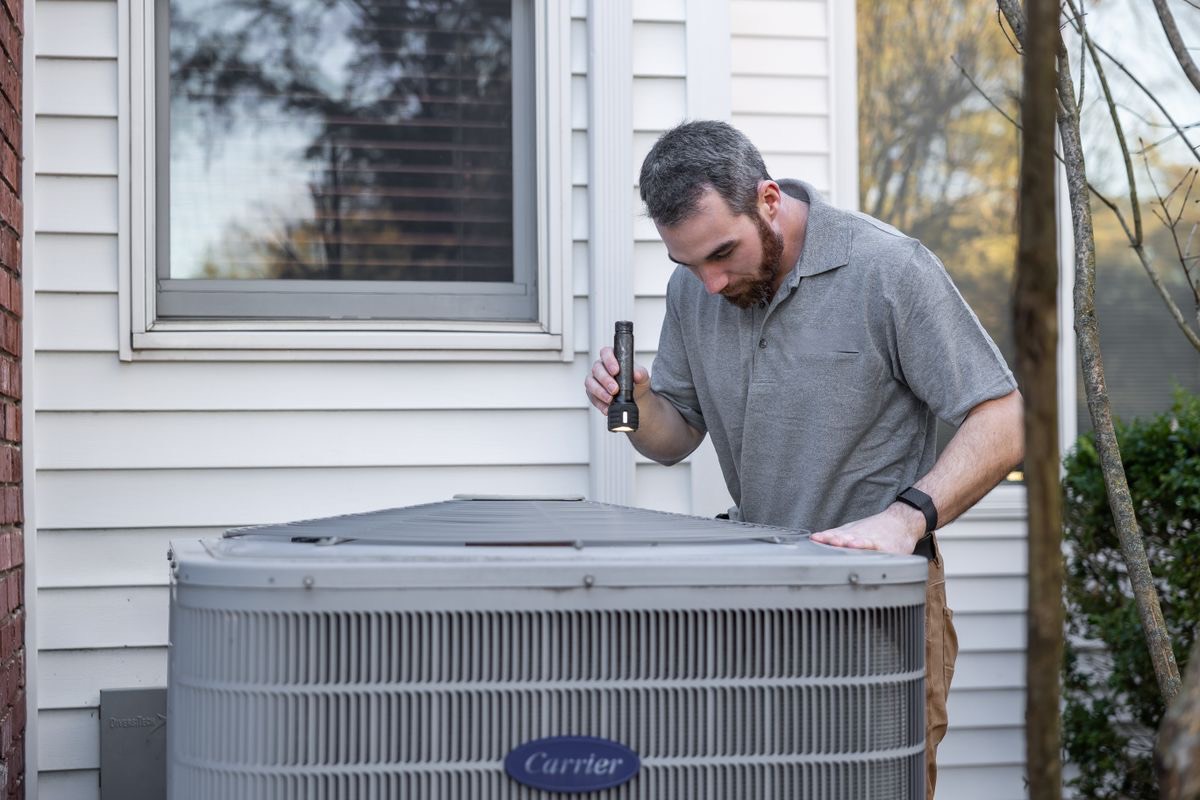
Replacement jobs are the money. Market for them on purpose.
Repair calls keep your techs busy. Replacements build the company. An HVAC marketing company that reports "cost per lead" without separating the two is hiding the most important number you have.
We market for replacements on two tracks:
- Direct replacement demand. Homeowners searching for new systems, heat pump upgrades, financing and "cost to replace AC." Fewer searches, bigger tickets, longer decision. These campaigns get judged on sold installs, not on how cheap the lead was.
- Replacements that come out of repair calls. An aging system with a failed compressor is a replacement conversation, not a repair ticket. When your CRM tags which ad brought that original service call, the install gets credited to the campaign that earned it. That changes which campaigns get more money.
This is also where your estimate process matters. A clear, professional proposal closes more replacements than a price scribbled on a work order. If you need a starting point, see our HVAC estimate template.
Maintenance agreements: the lead source you already paid for
Every customer you have served is a homeowner you already paid to acquire. A maintenance agreement turns that one-time job into two visits a year, a reason to be in the house before the next breakdown, and first shot at the replacement when the system finally quits.
We support agreement sales with email and SMS campaigns to your customer list ahead of each season, retargeting ads to past customers, and landing pages that explain the plan in plain words. This is cheap marketing compared to cold ads, and it smooths out the shoulder months.
HVAC lead generation measured by booked and sold jobs
This is the part that separates us from most agencies. We don't stop counting at the lead. We track every step:
| Stage | What we measure | Why it matters |
|---|---|---|
| Lead | Calls, forms, LSA leads by campaign | Shows which ads make the phone ring |
| Booked call | Leads that became a scheduled visit | Filters out tire kickers and wrong numbers |
| Estimate / proposal | Replacement quotes sent | Shows which campaigns bring big-ticket work |
| Sold job | Revenue closed, by campaign | The only number that pays you |
To do this, we set up a CRM built for contractors that follows each lead from the first call to the invoice. Then we feed sold jobs back into Google Ads with offline conversion imports, so Google learns to find more homeowners who buy, not just more homeowners who click.
You see all of it in a live dashboard. Spend, leads, booked calls, proposals, sold revenue, by campaign, in real time. No waiting for a PDF.
What our HVAC marketing agency does for you
We keep the list short on purpose. These are the services we run for HVAC companies:
- Paid ads: Google Ads, Local Services Ads, Meta (Facebook and Instagram) and TikTok, split by emergency, replacement and maintenance intent.
- CRM implementation: so every lead is tied to the ad that brought it and the job it became.
- Web design, SEO and blog: service pages for every city and every service you want, built to make the phone ring. More on that in our SEO for contractors page.
- Email and SMS marketing: seasonal tune-up pushes and maintenance agreement renewals to your own customer list.
- Social media management and video editing: real jobs, real crews, before and after installs.
- Live dashboard: the whole funnel from ad dollar to sold job, always up to date.
The founder, Luis Gustavo Nascimento, is a Google Partner, and the same people who build your campaigns are the ones who adjust them.
What the numbers usually look like
We won't promise you a number. Nobody honest can. What we can show you is what our campaigns average across residential construction: cost per lead of $166, cost per booked estimate of $315, cost per proposal of $494 and cost per signed contract of $1,714, on an average ad spend of $4,300 a month with about $31,000 a month in revenue. That's about 7x return per ad dollar. These are our averages across residential construction campaigns; results vary by trade, region, price and sales process.
Two examples from home services: one company spent about $1,500 a month on ads and closed about $99,000 in two jobs. An electrical contractor spent about $2,500 and closed about $80,000. When the whole funnel is mapped, from ad to lead to estimate to proposal to signed job, these services usually return 6x to 20x on ad spend in our experience. HVAC replacements fit that pattern well because the ticket is big and the need is real.
How to choose an HVAC marketing agency
Every list of "best HVAC marketing companies" ranks agencies by awards and headcount. Ask these questions instead:
- Can you show me revenue by campaign? Not leads. Revenue. If they can't, they are guessing too.
- How do you separate emergency calls from replacement leads? If the answer is "we don't," your best campaigns are underfunded.
- What happens to my budget in the shoulder season? Listen for a plan, not "we keep it steady."
- Do I own my ad accounts, website and data? You should. Always.
- Who actually runs my account? A senior person, or a rotating junior juggling dozens of other accounts?
If you want to grow the business side too, pricing, agreements and hiring, read our guide on how to grow an HVAC business.
Want to know what your current marketing is really bringing in? Send us your last few months of ad spend and job numbers through the free audit form below. We'll show you which campaigns are paying for themselves and which ones are just keeping the phone busy.
Frequently asked questions
How much should an HVAC company spend on marketing?
It depends on your market, your capacity and how much of your revenue comes from replacements. Our averages across residential construction campaigns sit around $4,300 a month in ad spend, but the right number is the one you can measure back to sold jobs. Start with what you can track, prove the return, then scale.
Are Local Services Ads worth it for HVAC?
For emergency and repair calls, usually yes, because they sit at the top of Google and you pay per lead instead of per click. They work best alongside Google Search ads, which give you more control over specific services, cities and replacement searches. The key is tracking which LSA leads turn into booked calls and sold jobs.
What is the difference between HVAC lead generation and an HVAC marketing agency?
A lead generation company sells you leads, often shared with other contractors. An HVAC marketing agency builds and runs your own campaigns, website and tracking, so the leads are exclusive to you and the accounts belong to you. You pay for the system, not per name on a list.
How do you handle the slow season in HVAC marketing?
We shift budget and message. In the shoulder months we push tune-ups, maintenance agreements and replacement financing, use email and SMS to your customer list, and run retargeting to past customers. Emergency campaigns scale back up when heat or cold returns.
How long does it take to see results?
Paid ads usually start producing calls within the first weeks once tracking is set up. SEO takes months to compound. What takes the longest is clean data: after a couple of months of tracking sold jobs by campaign, budget decisions get a lot sharper.
Do you work with HVAC companies outside a specific region?
Yes. We work with HVAC and home services companies across the US. Campaigns are built around your service area, your seasons and your climate, so a heating-heavy market and a cooling-heavy market get different plans.