
SEO for roofers is sold the same way everywhere: a PDF of keyword positions, a traffic line going up and a promise that the phone will ring "soon." Meanwhile the roofer down the street, with a worse crew and better map listing, gets the calls after every storm.
If you paid an agency $1,500 a month for roofing SEO and can't name one signed roof that came from it, you didn't buy SEO. You bought a spreadsheet of rankings.
We come from paid ads, where every dollar has to answer for itself. So we run SEO the same way: how many calls came from organic search, how many became inspections, how many became signed roofs, and what each one cost. This page explains how roofing SEO works, what we do, and what you should expect.
Why roofing SEO is different from SEO for other trades
Roofing has three things most trades don't: demand that jumps overnight when a storm rolls through, a huge gap in ticket size between a repair and a full replacement, and a lot of homeowners who don't have a roofer in mind until water hits the ceiling. That changes how you build a site.
- Storm season spikes. After hail or high wind, searches for roof inspections and storm damage go up in the affected towns. The roofers who already rank on those pages get the calls. You can't build that ranking the week of the storm. It has to be there before.
- Repair vs replacement. "Roof leak repair" and "roof replacement cost" are different people with different budgets. A repair call can turn into a replacement, but only if the page, the inspection and the proposal are built for it.
- Local, local, local. Almost every roofing search has a town in it, or Google adds one based on where the person is. Roofing SEO is local SEO first.
Everything below is how we handle those three things. If you want the bigger picture of how we run SEO for every trade, start with our main page on SEO for contractors. This page goes deep on roofing.
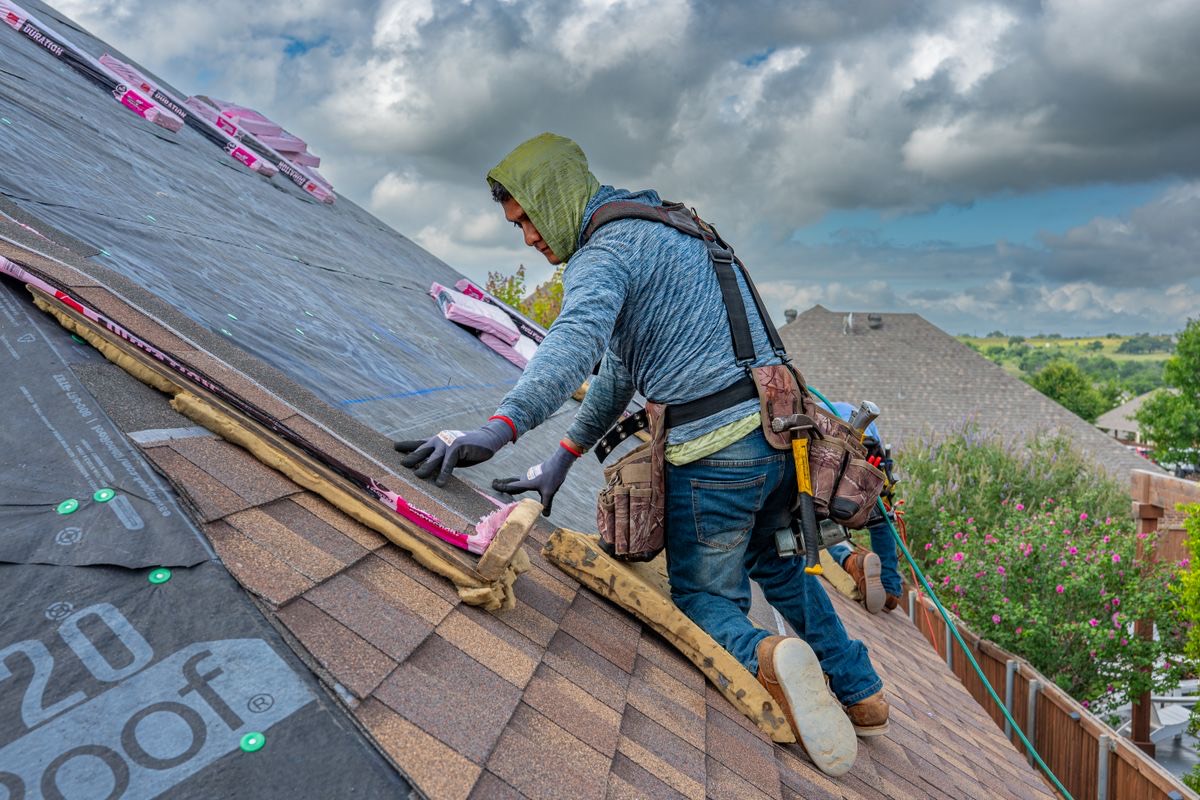
Local SEO for roofing companies: the Google Business Profile comes first
When a homeowner searches "roofer near me" or "roof repair in [town]," the map pack usually shows up above the regular results. For a lot of roofing searches, that map is the whole game. Google explains in its own guide on how local ranking works that it comes down to relevance, distance and prominence. You can't move your shop closer to every homeowner. You can work on the other two.
What we do on your profile:
- Categories and services. Primary category set right, then every roofing service you actually sell listed one by one: shingle replacement, metal roofing, flat roofs, roof repair, storm damage inspections, gutters if you do them.
- Service areas that match where your crew wants to drive. Not a 60 mile radius because it looks bigger. The towns where your best jobs are.
- Photos, often. Before and after, crew on the roof, tear-off, finished job from the street. Google lets you add photos and videos to your Business Profile, and a profile full of real jobs looks like a real company. A profile with the logo and one blurry truck does not.
- Reviews that mention the job and the town. We set up a simple ask with a direct review link that your team sends when the homeowner sees the finished roof. A review that says "they replaced our roof in Plano after the hail" helps more than "great job."
Roofer SEO on your website: city pages and service pages that earn the call
Your website is where roofer SEO either turns into calls or dies. Most roofing sites have one "Services" page that lists everything in a paragraph and a homepage that says "serving the greater area." Google has nothing to rank, and the homeowner has nothing to trust.
One page per service
Roof replacement, roof repair, storm damage, metal roofing, commercial or flat roofs if you do them. Each page answers what the homeowner actually asks on an inspection: how long it takes, what materials you use, what happens if you find rotted decking, how financing or insurance work in your company. With your photos, not stock.
City and service area pages done right
Here's where most roofing SEO goes wrong. Someone builds 80 pages that are the same text with the town name swapped. Google's spam policies call that out directly as doorway pages, and it can hurt the whole site.
We build fewer city pages, for the towns that matter to your revenue, and each one earns its place: jobs you did in that town, the roof types common in those neighborhoods, the local permit or HOA quirks you deal with, reviews from homeowners there. That's a page a homeowner reads to the end.
Repair vs replacement keywords
We split the keyword map on purpose. Replacement terms ("roof replacement cost," "new roof [town]," "architectural shingles") go to pages built to sell the big ticket. Repair terms ("roof leak repair," "missing shingles," "emergency roof tarp") go to pages built to book the inspection, where your crew can show the homeowner what they're really dealing with. Mixing both on one page usually means ranking for neither.
A site that turns visitors into calls
Fast on a phone, phone number at the top, an inspection form that takes under a minute to fill out. If your current site looks fine but never makes the phone ring, that's a website problem before it's an SEO problem, and it's what our contractor website design work fixes.
Storm season: getting ready before the hail, not after
Storm season is where roofing SEO pays for itself or doesn't. The pages that rank the morning after a hailstorm were published months before. So we build the storm content in the calm months:
- A storm damage and hail damage page for each main area you serve, explaining what an inspection looks like and what the homeowner should do first.
- Blog posts that answer the questions homeowners type in a panic: how to tell if hail damaged your roof, what to do about a leak before the roofer arrives, how insurance claims usually work.
- Google Business Profile posts and fresh photos when a storm hits your area, so the profile looks active when the searches jump.
One honest trade-off: SEO can't be switched on for next week's storm. When you need the calls now, paid search and Local Services Ads cover the gap while the organic pages grow. That's covered on our pages about roofing lead generation and Google Ads for contractors. The roofers who do best run both, so the ads carry the spike and the SEO keeps bringing calls when the ad budget is paused.
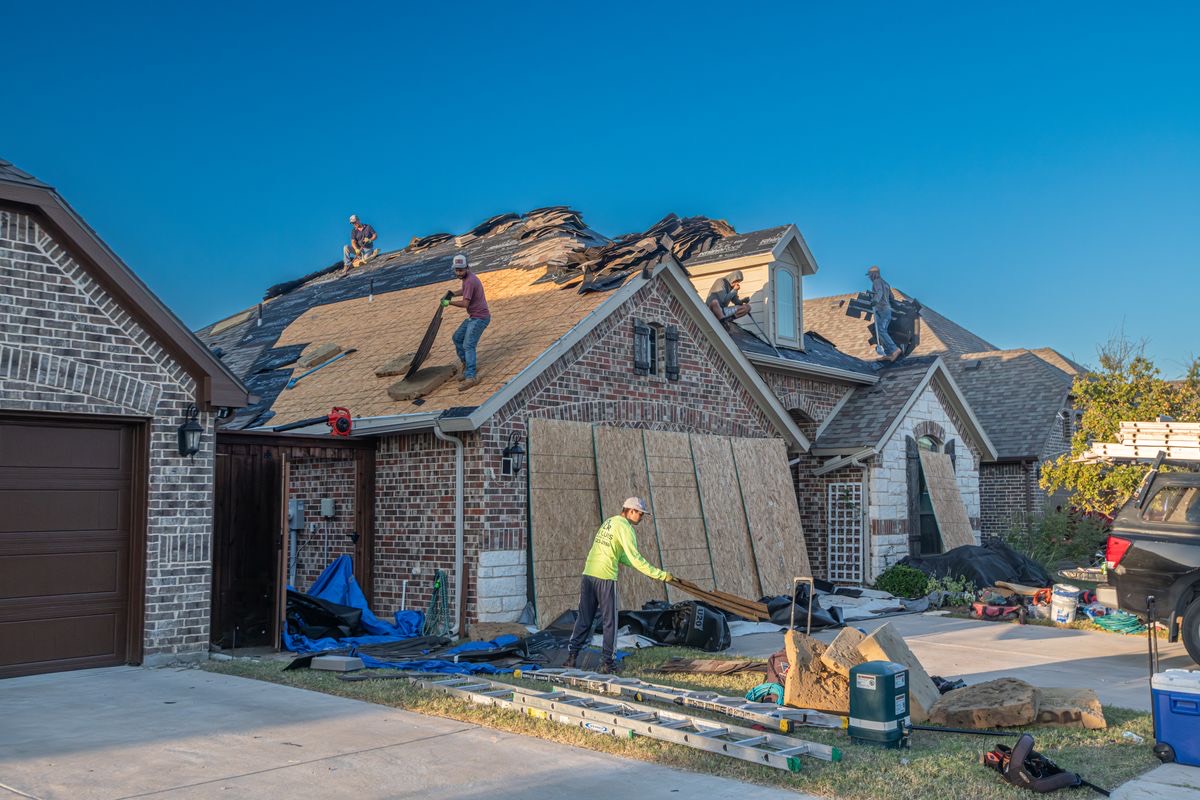
How we measure roofing SEO: signed roofs, not positions
Rankings are a means. We still watch them, but they're not what you pay us for. What you see on your live dashboard is the path each organic lead takes: call or form, inspection booked, proposal sent, signed roof, and the contract value.
That tells you things a ranking report never will. Maybe the replacement page brings fewer calls than the repair page, but three times the revenue. Maybe one city page brings calls from a town where your close rate is terrible. You find out, and you decide where to push.
Every organic lead lands in the same CRM as your ad leads, with its source attached. If you don't have that set up yet, see how we do CRM for contractors. For context on the money side, our averages across residential construction campaigns are about $166 per lead and about $1,714 per signed contract on paid media, with roughly 7x return per ad dollar. Results vary by trade, region, price and sales process. Organic leads don't carry a click cost, which is why SEO is worth building while the ads pay the bills.
What working with us looks like
- Audit. We look at your Google Business Profile, your site, your reviews, and who ranks in your towns today. You get a plain list of what's broken and what's worth doing first.
- Foundation. Profile cleanup, technical fixes, tracking so every call and form is tied to its source.
- Pages. Service pages first, then the city pages for your best towns, then storm content before the season.
- Blog and photos, ongoing. Answers to real homeowner questions, and a steady flow of job photos to your profile.
- Review the numbers together. The dashboard is live, so we talk about what's signing and adjust the plan around revenue.
What we won't do: guarantee a #1 ranking, build 100 copy-paste city pages, or buy links from sites nobody reads. Nobody honest can promise a position on Google. What usually happens when the work above is done well is that the map listing and the core service pages start bringing calls within a few months, and it keeps compounding from there.
Our founder, Luis Gustavo Nascimento, is a Google Partner, and our team runs ads and SEO for construction and home services companies every day. If you want to know where your roofing company stands on Google right now, and what it would take to get the calls your competitors get after the next storm, ask for the free audit below.
Frequently asked questions
How long does SEO take to work for a roofing company?
Changes to your Google Business Profile can show up in the map results within weeks. Service and city pages usually take a few months to rank, depending on how competitive your market is and how strong your site already is. That's why we build storm content well before the season.
Is roofing SEO better than Google Ads or Local Services Ads?
They do different jobs. Ads bring calls as soon as they're live and are best for storm spikes, while SEO takes longer but keeps bringing calls without paying per click. Most roofing companies that grow steadily run both and track each one to signed roofs.
Should my roofing company have a page for every city we serve?
Only for the towns that matter to your revenue, and only if each page has something real to say: local jobs, photos, reviews and roof types common in that area. Dozens of pages with the town name swapped look like doorway pages to Google and can hurt the whole site.
How important are reviews for roofer SEO?
Very. Reviews are part of how Google judges prominence in the map results, and homeowners read them before calling. The best habit is a direct review link sent by your team right after the homeowner sees the finished roof, asking them to mention the work and their town.
Do I need a new website for roofing SEO?
Not always. If your site is fast on a phone, easy to update and makes calling obvious, we build on it. If it's slow, outdated or impossible to add pages to, rebuilding is usually cheaper than fighting it.
Can you guarantee first page rankings for my roofing company?
No, and you should be careful with anyone who does. Google doesn't sell organic positions. What we can do is the work that usually moves rankings, and show you on a live dashboard how many calls, inspections and signed roofs come from it.